Designing state-aware UX for a 0→1 broadband launch
Designing honesty into a product you can't fully control.
Product Designer · giffgaff · 2023–2024
Designing honesty into a product you can't fully control.
Product Designer · giffgaff · 2023–2024
giffgaff is a Mobile Virtual Network Operator (MVNO) running on O2's network, known for its member-led model and low-overhead approach to customer service. In 2023 the business entered the Full Fibre broadband market, a move with no existing playbook and infrastructure that sat entirely outside its core SIM-only product.
Broadband is a fundamentally different product. It involves installation appointments, engineer visits, activation windows, router delivery and a long lead time between order and go-live that MVNO customers had never encountered. Every stage in that journey had to be communicated clearly, or the support load would arrive before the product was even live.
I joined as the sole product designer on the Full Fibre squad, working in a cross-functional team with product managers, engineers, a service designer and an external delivery partner.
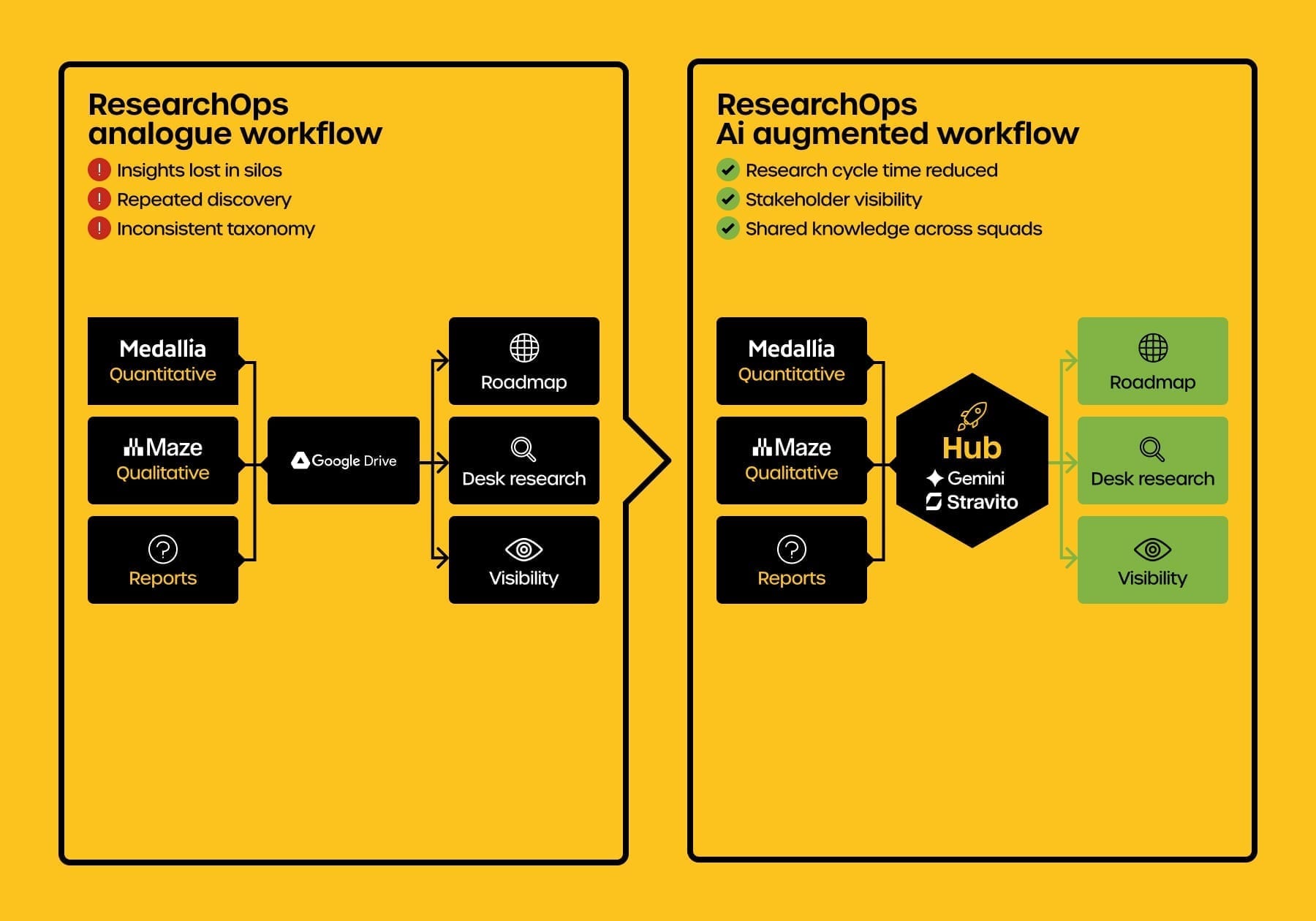
Rapid experimentation across the early trials was generating insight that was not being shared effectively across the team. Different workstreams were learning things independently, and the gap between what users were telling us and what fed into roadmap decisions was longer than it needed to be.
I ran stakeholder interviews across the Customer Experience (CX) team, commercial and our network partner VMO2 to map what was already known before we ran new research. Alongside this I standardised our insight library, introducing a consistent approach to tagging and categorising findings so that desk research could be done quickly without re-running the same discovery work. This gave product leads a reliable starting point when making trade-offs in real time.
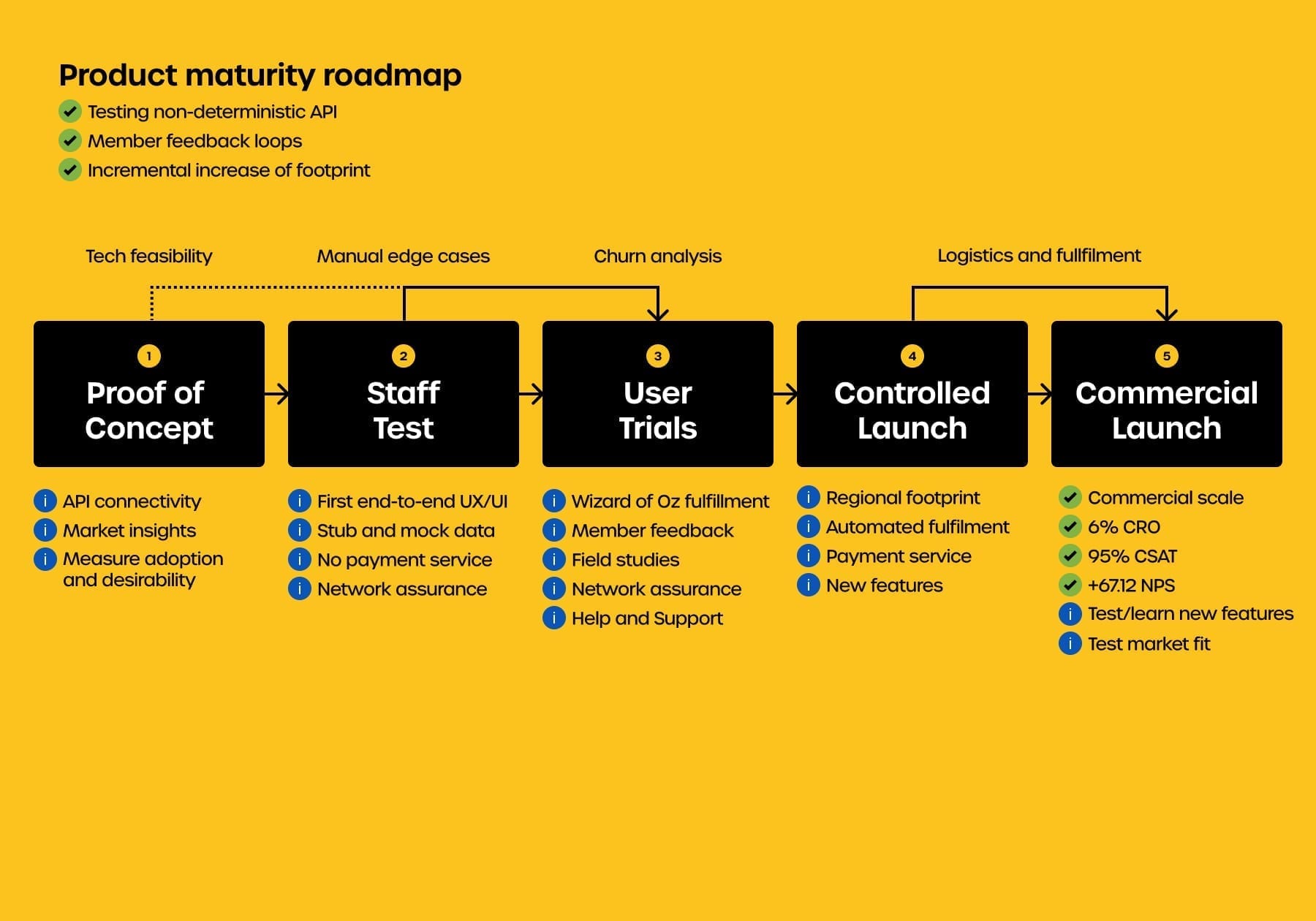
Rather than designing a complete product and launching at scale, we built in stages: internal staff trials, a small member cohort, a controlled regional launch, and then the national commercial launch.
The small cohort phase was the most useful. We ran field visits alongside the actual installations, observing and talking to members during the engineer visit. That gave us a picture of the emotional reality of the experience that remote research could not replicate. Each phase produced real contact rate and satisfaction data before the next cohort went live, so problems were caught and fixed before scaling. The product that launched nationally was substantially different from the one we started with.
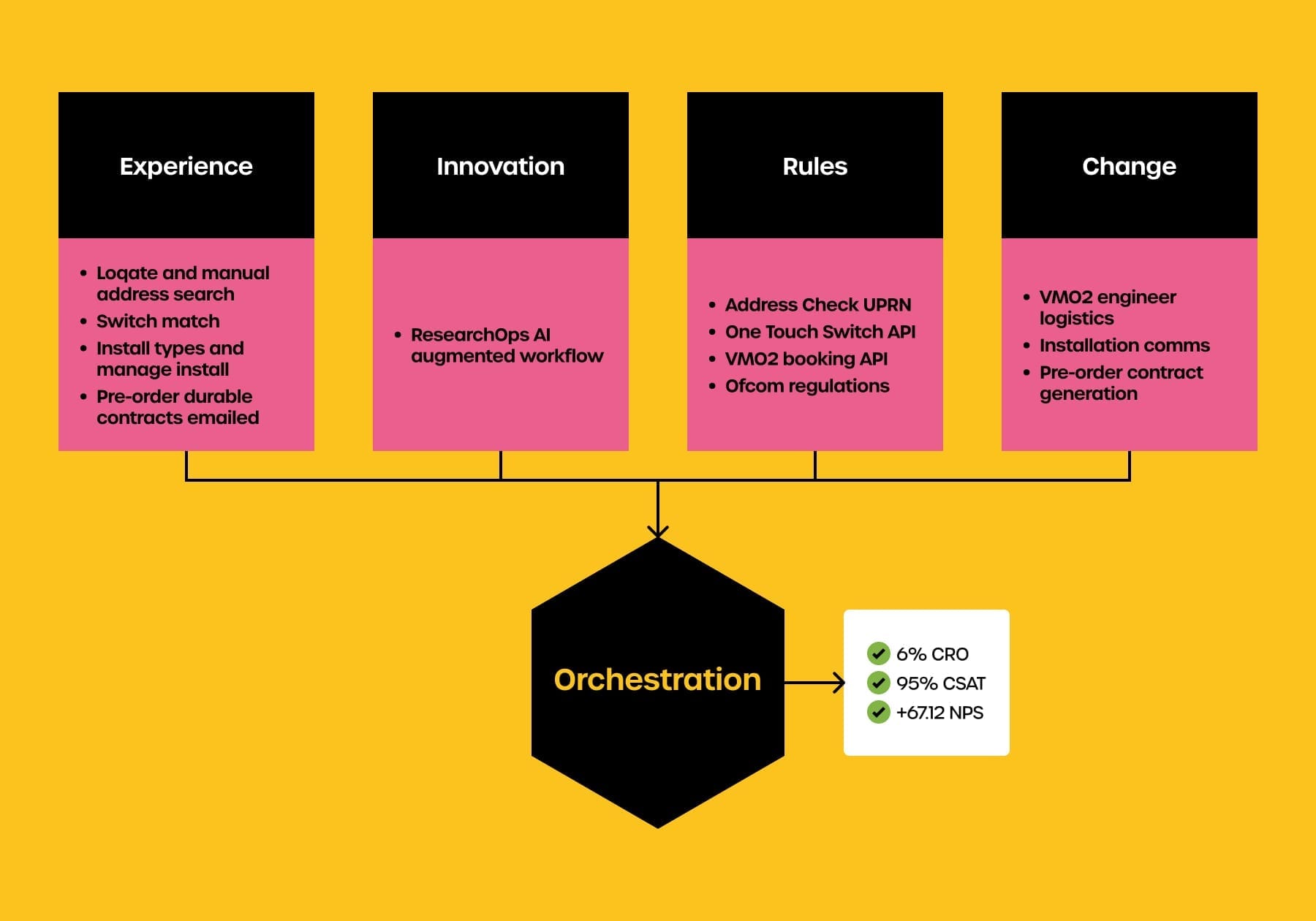
My main contribution was designing the logic of the acquisition and onboarding journey. Three concurrent third-party integrations shaped what the experience could and could not do, and each could alter the user's path in ways we could not predict in advance.
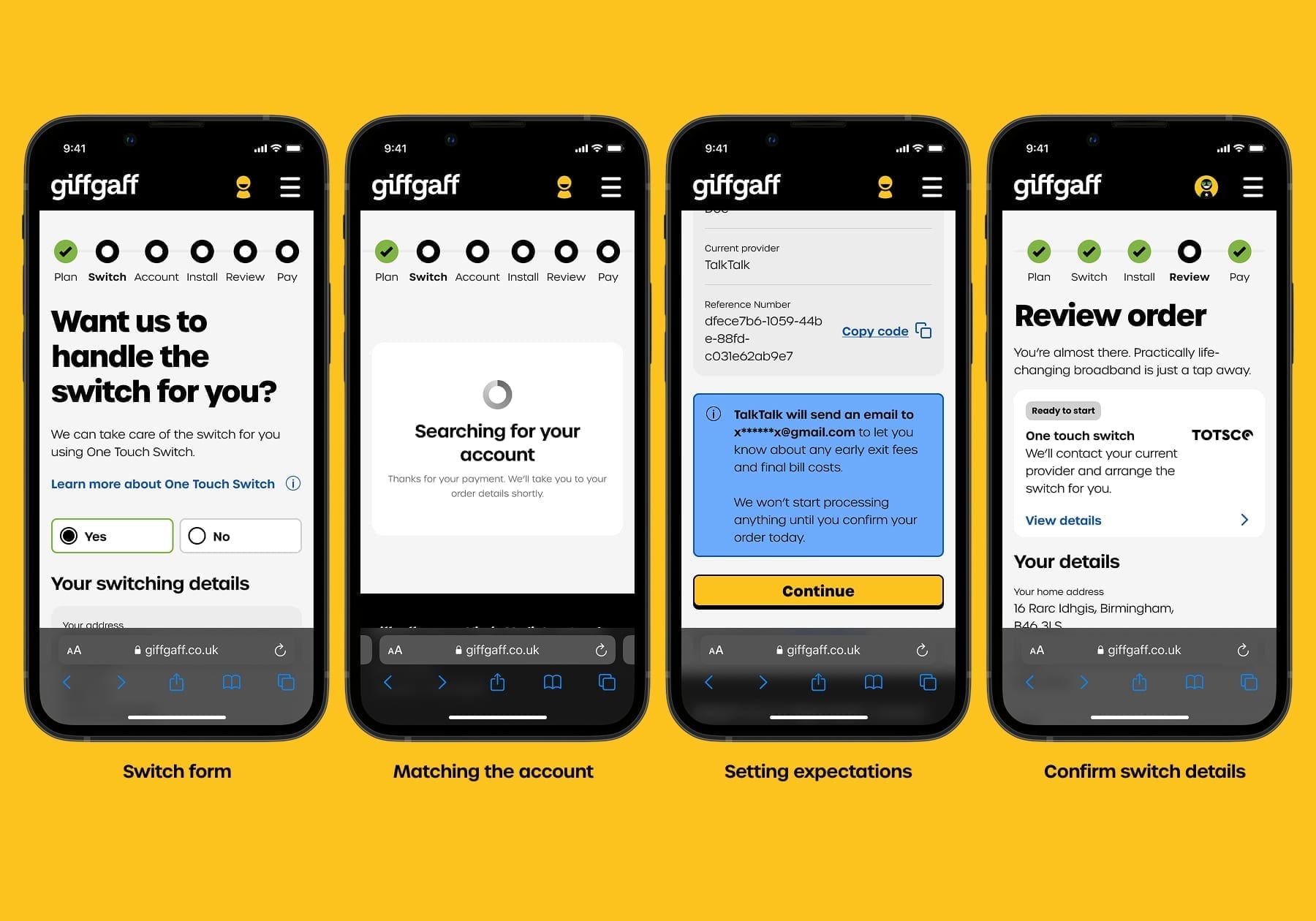
The address check, using Loqate to look up the Unique Property Reference Number (UPRN) for each property, was the entry point. It determined whether the property was a flat or a house and fed into what type of installation would be needed. The installation slot could not be confirmed until a regulatory switch request was registered via SureSwitch, which is governed by Ofcom's One Touch Switching (OTS) regulation. Each of these introduced a degree of uncertainty into the journey that could not simply be designed away.
The key decision was to be honest with members about that uncertainty rather than hiding it behind false progress states. I worked with engineering to make the interface reflect each stage accurately, including the ambiguous ones, so that members understood what was happening even when we were waiting on external systems.
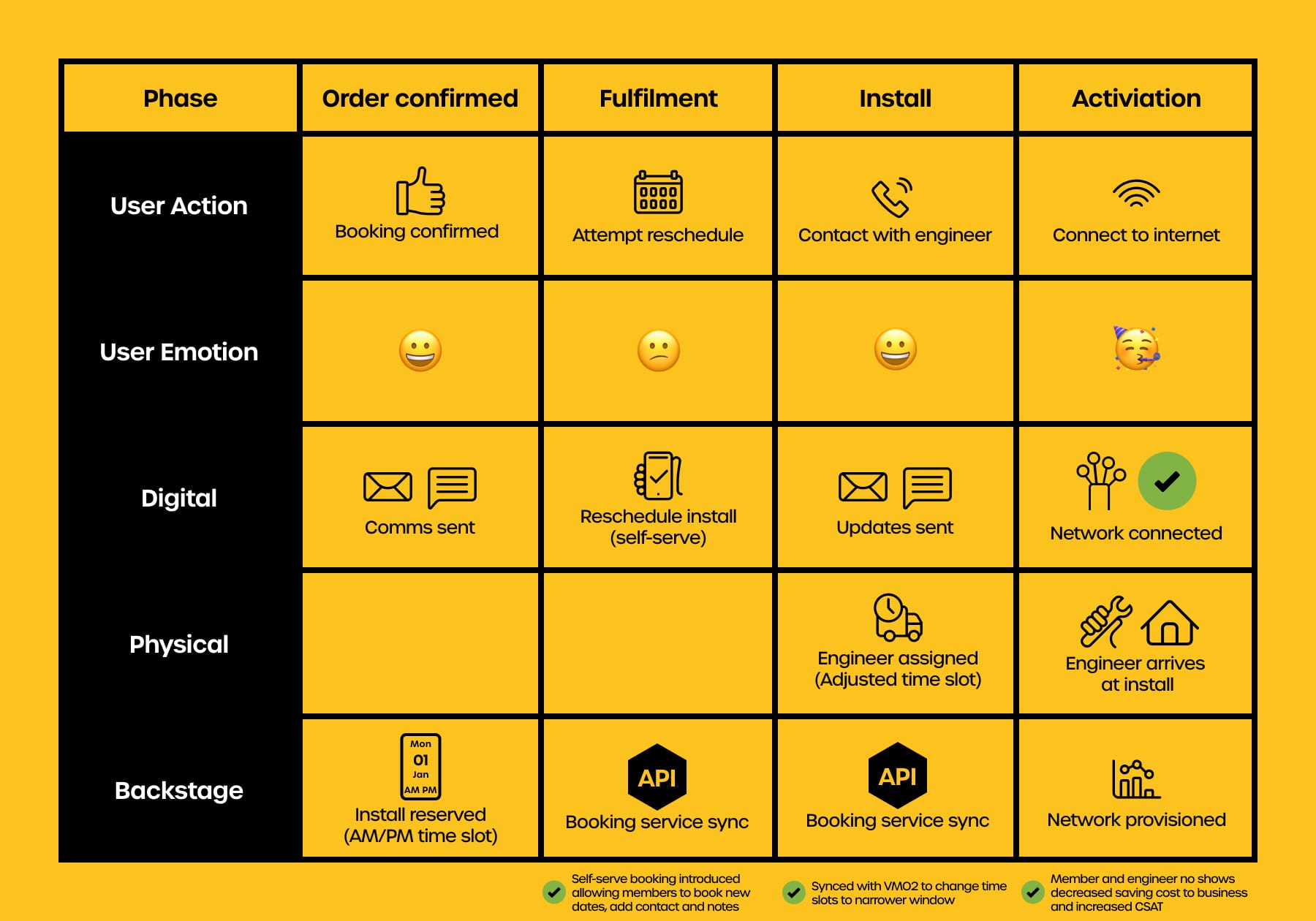
Research pointed to the period between order confirmation and installation day as where most anxiety was building. Around 40% of pre-install cancellations were happening in this window.
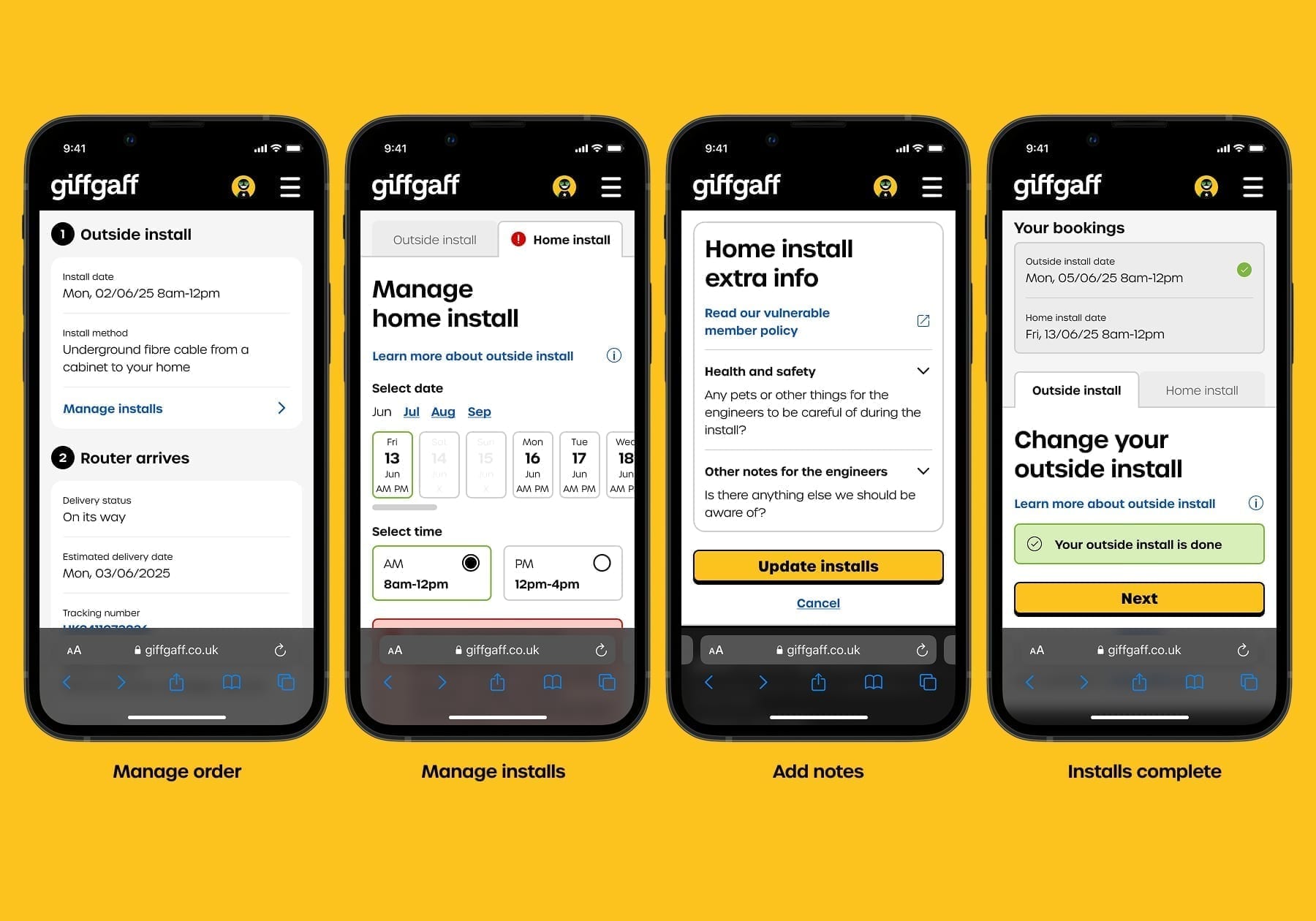
I designed a self-serve preparation flow that collected information needed by the field engineer ahead of the visit, including health, safety and vulnerability data, and gave members proactive status updates at each point along the way. Working with the content designer, we wrote the messaging to reflect VMO2's logistics accurately rather than obscure delays with vague updates.
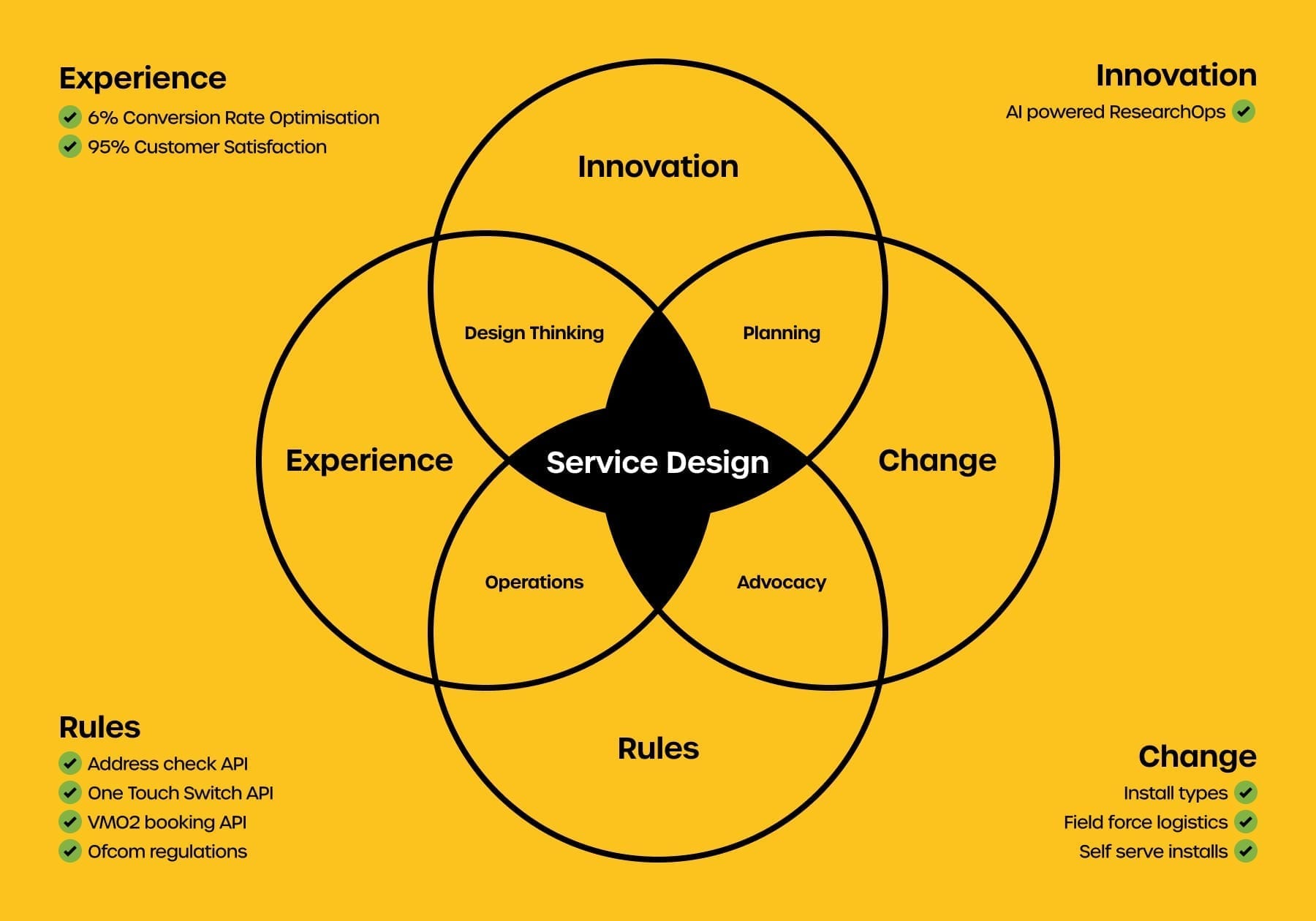
Despite unavoidable delays in VMO2's field operations, we maintained a Net Promoter Score (NPS) of 95 from the trialist cohort, which held through to commercial launch.
giffgaff Full Fibre launched to the first postcode cohort and scaled to a national commercial launch.